
Fire Alarm Systems on Warships/Merchant vessels
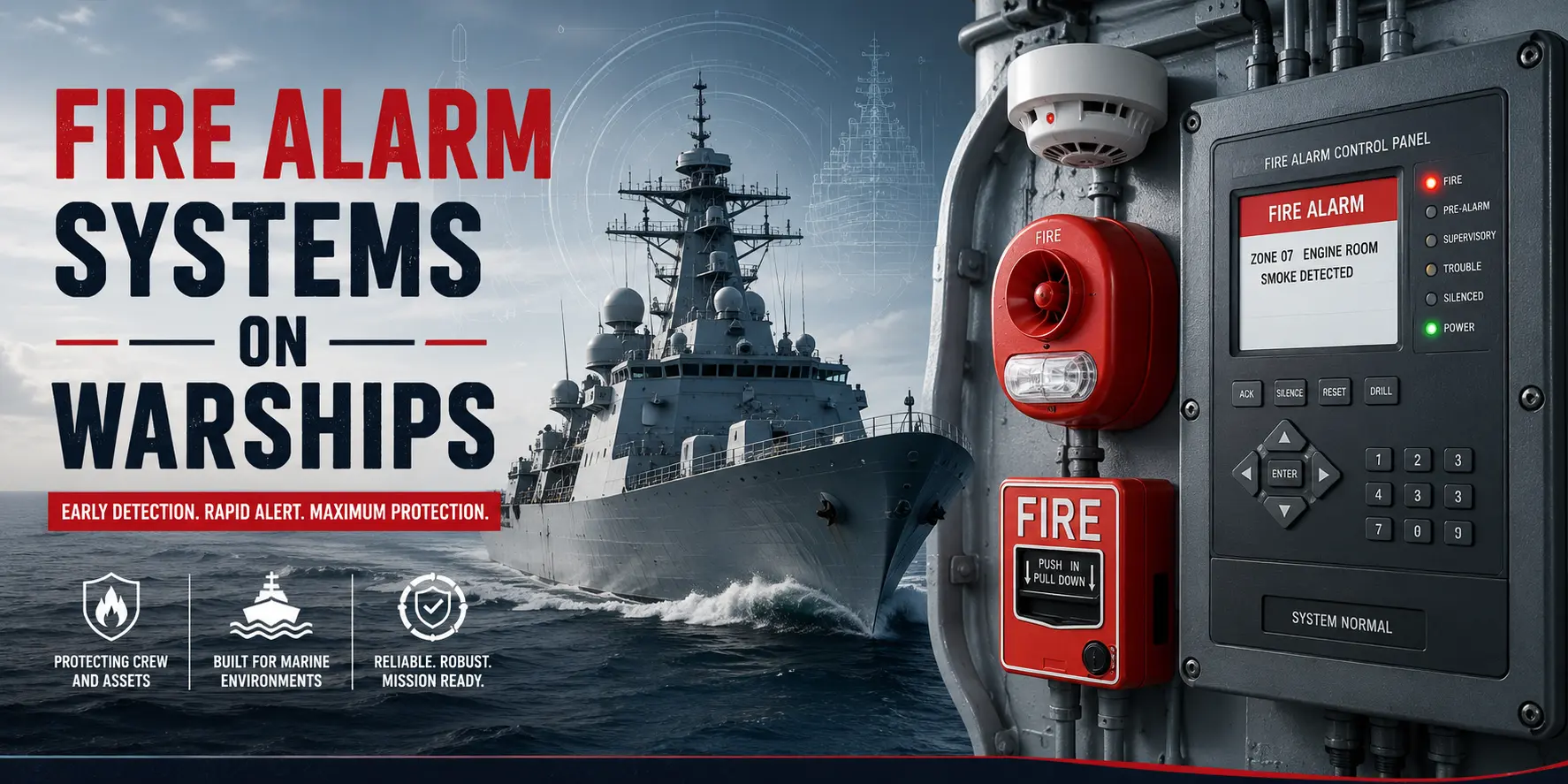
Fire is one of the most dangerous things that can happen on a ship at sea. When you are on land, you can run out of a building and wait for the fire department to arrive. On a warship, there is nowhere to run.
You are in the middle of the ocean, often carrying thousands of gallons of fuel and tons of explosives like missiles and shells. Because of this, the fire alarm system is the most important safety tool on the ship.
In this blog, you will learn how these systems work, why they are different from the ones you see in schools or malls, and how they protect the sailors and the ship.
Table of Contents
Why Fire Alarms are Critical on Warships
Why Fire Alarms are Critical on Warships
A warship is a very complex machine. It has many rooms and levels. If a fire starts in a small engine room or a storage area, it can spread very fast. The fire alarm system is designed to find a fire the second it starts. If the crew knows about the fire early, they can put it out before it becomes a disaster.
The Purpose of Early Detection
The main goal of the fire alarm system is early detection. You need to know that there is smoke or heat before you can even see the flames. On a warship, the system must work even if the ship is moving through rough waves or if the ship is in a battle. It must be very tough and reliable.
Protecting the Crew
The most important part of any ship is the people on it. The fire alarm system gives the crew time to put on their safety gear and move to their stations. It also tells the people in charge where the fire is so they can move sailors away from the danger.
Saving the Ship
Warships cost billions of dollars and take years to build. A small fire that goes unnoticed can destroy the whole ship. By having a smart fire alarm system, the navy ensures that the ship stays in the fight and stays afloat.
The Main Parts of a Fire Alarm System
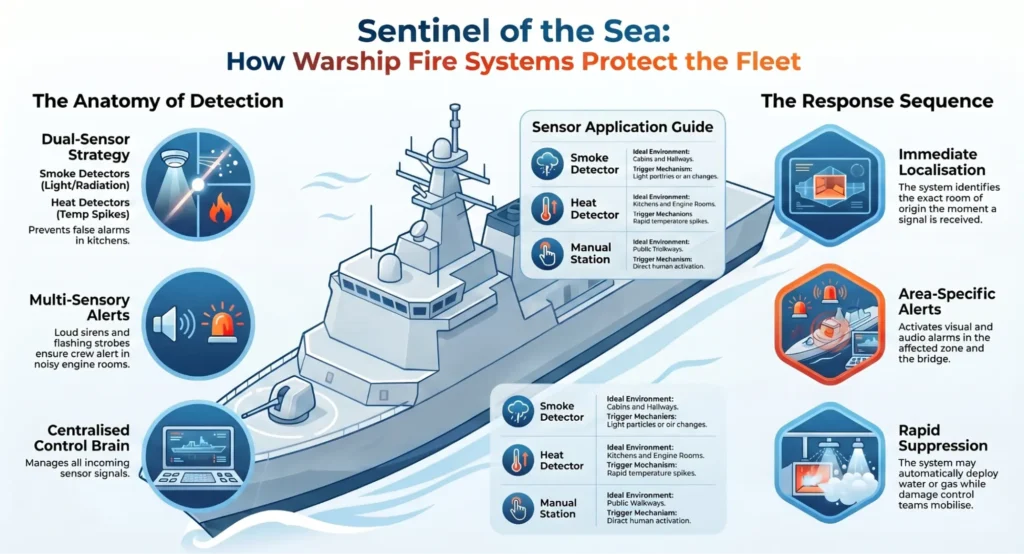
A fire alarm system on a warship is not just one device. It is a large network of many parts working together. You can think of it as the nervous system of the ship.
The Control Panel
The control panel is the brain of the system. It is usually located on the bridge, the control center of the ship. This panel receives signals from all the sensors around the ship. If a sensor detects smoke, it sends a message to the control panel. The panel then decides what to do, like ringing bells or flashing lights.
Smoke Detectors
Smoke detectors are the eyes of the system. They are placed in almost every room on the ship. There are different types of smoke detectors. Some use light to see smoke particles. Others use a tiny bit of safe radiation to sense changes in the air. On a warship, these detectors are built to handle vibrations and heat.
Heat Detectors
Sometimes a room is naturally smoky or dusty, like a kitchen or an engine room. In these places, a smoke detector might give a false alarm. Instead, the navy uses heat detectors. These sensors trigger the alarm only when the temperature goes above a certain limit or if the temperature rises very fast in a short time.
Fire Alarm Button
You have probably seen these in hallways. They are red boxes with a lever/button. If a sailor sees a fire before the sensors do, they can pull this lever or press the button to start the alarm manually. This sends an instant signal to the bridge and the fire teams.
Alarm Bells and Sirens
Once a fire is detected, everyone on the ship needs to know. Warships use very loud sirens and bells. These sounds are different from other alarms, like the general quarters alarm, so that sailors know exactly what the problem is.
Visual Signals
Ships are loud places. In an engine room, you might not hear a siren because the machinery is too noisy. Because of this, warships use bright flashing lights called strobes. When you see the flashing red or white light, you know there is an emergency even if you cannot hear the bell.
How the System Works Step by Step
Understanding how the system reacts is important. It is a very fast process that happens in seconds.
- Detection: A sensor picks up smoke or heat.
- Signal: The sensor sends an electrical signal through the wires to the control panel.
- Analysis: The control panel identifies exactly which room the signal came from.
- Alert: The panel activates the sirens and lights in that specific area and on the bridge.
- Action: The damage control team looks at the panel to see where to go.
- Suppression: In some cases, the system can automatically turn on water or gas to put out the fire.
Recommended Read: What Is Pump Priming and How to Do It?
Different Types of Detectors for Different Rooms
Not every room on a warship is the same. The fire alarm system must be customized for each area.
Living Quarters
The rooms where sailors sleep are called cabins. These rooms usually have standard smoke detectors because they are quiet and clean.
Engine Rooms
The engine rooms are hot and have oil mist in the air. Standard smoke detectors would go off all the time. Here, the navy uses flame detectors that look for the specific light patterns of a fire, or heat detectors that watch for spikes in temperature.
Magazine and Weapon Areas
The places where missiles and bullets are stored are the most dangerous. These areas have very sensitive fire alarm systems. They often have high speed sensors that can detect a spark in milliseconds. If a fire is detected here, the system might automatically flood the room with water to keep the explosives cool.
Hangar Decks
On aircraft carriers, the hangar deck is where planes are kept. Since planes have fuel, this is a high risk area. The fire alarm system here uses long range infrared sensors that can see a fire from across the large deck.
Wiring and Survivability
On a land building, if a wire burns, the fire alarm might stop working. On a warship, the system must keep working even if the ship is damaged by a hit.
Redundant Wiring
Redundancy means having a backup. Warships have fire alarm wires running on both sides of the ship. If a fire or an explosion destroys the wires on the left side, the signals can still travel through the wires on the right side. This ensures the bridge always knows what is happening.
Fire Resistant Cables
The cables used for fire alarms are not normal wires. They are wrapped in special materials that can survive direct flames for a long time. This gives the system enough time to report the fire before the wires melt.
The Role of the Damage Control Center
The Damage Control Center is the hub for all safety information. It is a room filled with screens and maps of the ship.
Monitoring the Whole Ship
When a fire alarm goes off, the people in this room see a light on a map. This tells them the deck number, the room number, and what kind of sensor went off. This allows them to send the fire team to the exact spot without wasting time.
Communication
The fire alarm system is linked to the ship’s internal phones and radios. The people in the Damage Control Center use this information to talk to the fire teams and give them updates on whether the fire is growing or shrinking.
False Alarms and How to Prevent Them
False alarms are a big problem. If the alarm goes off all the time for no reason, people might stop taking it seriously.
Dust and Moisture
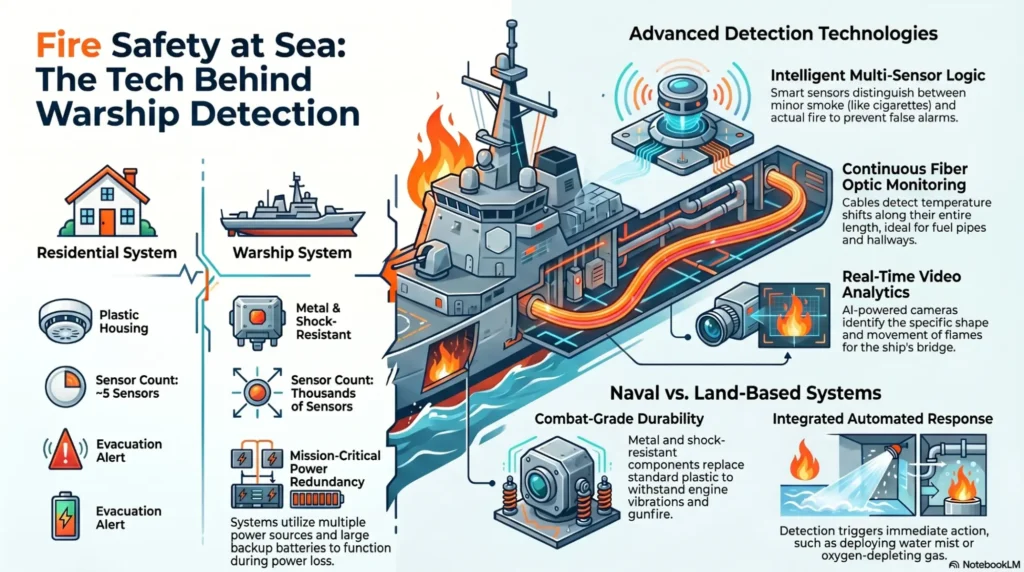
Ships are in the middle of the ocean, so there is a lot of salt and moisture in the air. Dust from maintenance work can also get into sensors. To prevent false alarms, sensors are cleaned often. Some modern sensors use two different technologies at once. For example, a sensor might require both smoke and heat before it triggers the full alarm.
Intelligent Sensors
New warships use smart sensors. These sensors can tell the difference between a sailor smoking a cigarette where they should not be and a real fire starting in a trash can. This helps reduce the number of times the crew has to run to their stations for no reason.
Recommended Read: 63rd National Maritime Day: Why It Matters for India and Why It Should Matter to You
Maintenance and Testing
A fire alarm system is only good if it works. The navy has strict rules for testing these systems.
Daily Checks
Every day, sailors check the control panels to make sure there are no error lights. They check to see if any sensors are blocked.
Periodic Testing
Every few months, the crew performs a full test. They use fake smoke from a can to trigger the sensors. They make sure the bells ring at the right volume and that the flashing lights work. They also check the backup batteries to ensure the system works even if the ship loses power.
Record Keeping
Every test and every alarm is recorded in a logbook. This helps the navy find patterns. If a specific sensor keeps failing, they can replace it with a better model.
The Connection to Fire Suppression Systems
A fire alarm is just the first step. On many warships, the alarm system is connected directly to systems that put the fire out.
Water Mist Systems
Some areas have pipes that can spray a very fine mist of water. When the fire alarm goes off, the system can be programmed to wait 30 seconds for people to leave and then start spraying.
Gas Systems
In rooms with electronics, water would ruin the computers. Instead, the fire alarm system triggers the release of special gases. These gases take away the oxygen that the fire needs to burn but are safe enough for humans to breathe for a short time as they exit.
The Human Element: Fire Watches
Even with the best technology, humans are part of the fire alarm system.
Standing Watch
When a ship is in extra danger or when sensors are being repaired, sailors stand fire watch. They walk around the ship with a radio and look for signs of fire. They act as human smoke detectors.
Training
Every sailor is trained on how the fire alarm system works. They know what the different sounds mean and where the pull stations are. This training is done over and over until it becomes a habit.
Modern Technology in Fire Detection
Technology is always changing. Newer warships use even more advanced tools to find fires.
Fiber Optic Sensors
Some ships use fiber optic cables to detect heat. These cables can sense temperature changes along their entire length. This is great for monitoring long hallways or fuel pipes.
Video Analytics
Cameras are now being used to find fires. Computers look at the video feed and can recognize the shape and movement of flames or the color of smoke. This gives the bridge a live view of the fire as soon as it starts.
Challenges in Fire Detection at Sea
Operating a fire alarm system at sea is hard.
Vibrations
Warships have large engines and guns. When the guns fire, the whole ship shakes. A normal smoke detector might break or fall off the ceiling. Warship sensors are bolted down and designed to take the shock.
Salt Air
Salt is very bad for electronics. It causes corrosion. The fire alarm components are sealed to keep the salt air out of the delicate circuits.
Extreme Heat
In some parts of the ship, like near the exhaust pipes, it is always hot. The system must be calibrated so it does not think the normal heat is a fire.
Recommended Read: How a Candle caused loss of $6.78M Superyacht in Miami – Case study
The Future of Fire Alarms on Warships
As we look forward, the systems will become even smarter.
Artificial Intelligence
AI will be used to predict where a fire might start. By looking at data from sensors over many years, the computer can tell if a machine is getting too hot and might start a fire before it actually happens.
Wireless Sensors
Wiring a ship is hard and adds a lot of weight. Engineers are looking for ways to use secure wireless sensors. This would make it easier to add sensors to old ships without pulling new wires through heavy steel walls.
Augmented Reality
In the future, fire teams might wear helmets that show them the fire alarm data. They could see through smoke using infrared sensors that are linked to the ship’s fire alarm network.
Conclusion
The fire alarm system on a warship is a lifesaver. It is a complex, tough, and smart network that watches over the sailors every second of every day. From the smoke detectors in the bedrooms to the heat sensors in the engine rooms, every part has a job to do.
You now know that it takes more than just a loud bell to keep a ship safe. It takes sensors, smart control panels, fire resistant wires, and a well trained crew. For a 10th or 12th pass student interested in engineering or the navy, understanding these systems is a great start. These systems show how electronics and safety engineering come together to protect people in the toughest environments on Earth.
Summary of Key Points
- Early Detection: The most important goal is to find the fire before it spreads.
- Diverse Sensors: Different rooms use smoke, heat, or flame detectors depending on the environment.
- Toughness: Everything is built to survive salt, heat, and the vibrations of battle.
- Redundancy: Backup wires and power sources ensure the system never fails.
- Human Action: The alarm is only the start. It alerts the crew so they can take action to save their ship.
By keeping these points in mind, you can appreciate the incredible work that goes into making warships some of the safest places to work, even when they are carrying dangerous cargo in the middle of the sea.
Frequently Asked Questions
1. What is the main difference between a warship fire alarm and a house fire alarm?
A warship fire alarm is built using rugged materials to survive explosions and vibrations, and it uses redundant wiring to stay active if the ship is damaged. Unlike home systems, it also connects directly to specialized military damage control centers to coordinate a massive crew response.
2. Why do engine rooms use heat detectors instead of smoke detectors?
Engine rooms often have natural oil mist, steam, or exhaust particles that would trigger a smoke detector constantly. Heat detectors are used because they only activate when they sense a dangerous temperature spike, which reduces the number of false alarms.
3. What happens if the fire alarm wires are cut during a battle?
Warships use redundant wiring loops that run along both the port and starboard sides of the vessel. If one set of wires is destroyed, the signal automatically travels through the backup path to ensure the bridge still receives the alert.
4. Can the fire alarm system put out a fire automatically?
Yes, in high risk areas like ammunition magazines or computer rooms, the alarm system is linked to automatic suppression systems. These can trigger water sprinklers or gas releases immediately after a fire is detected to stop it from spreading.
5. How do sailors hear the alarm in a noisy machinery room?
In areas where the engines are too loud to hear a siren, the system uses high intensity flashing strobe lights. These visual signals ensure that every sailor knows there is an emergency even if they are wearing hearing protection.
6. How often is the fire alarm system checked by the crew?
The system undergoes basic monitoring every day through the control panel to check for error codes or faults. More thorough tests, where sensors are activated with fake smoke or heat, are performed on a regular periodic schedule to guarantee everything works perfectly.