
Documents You Need to Keep in Mind and Carry Before Your Ship Joining
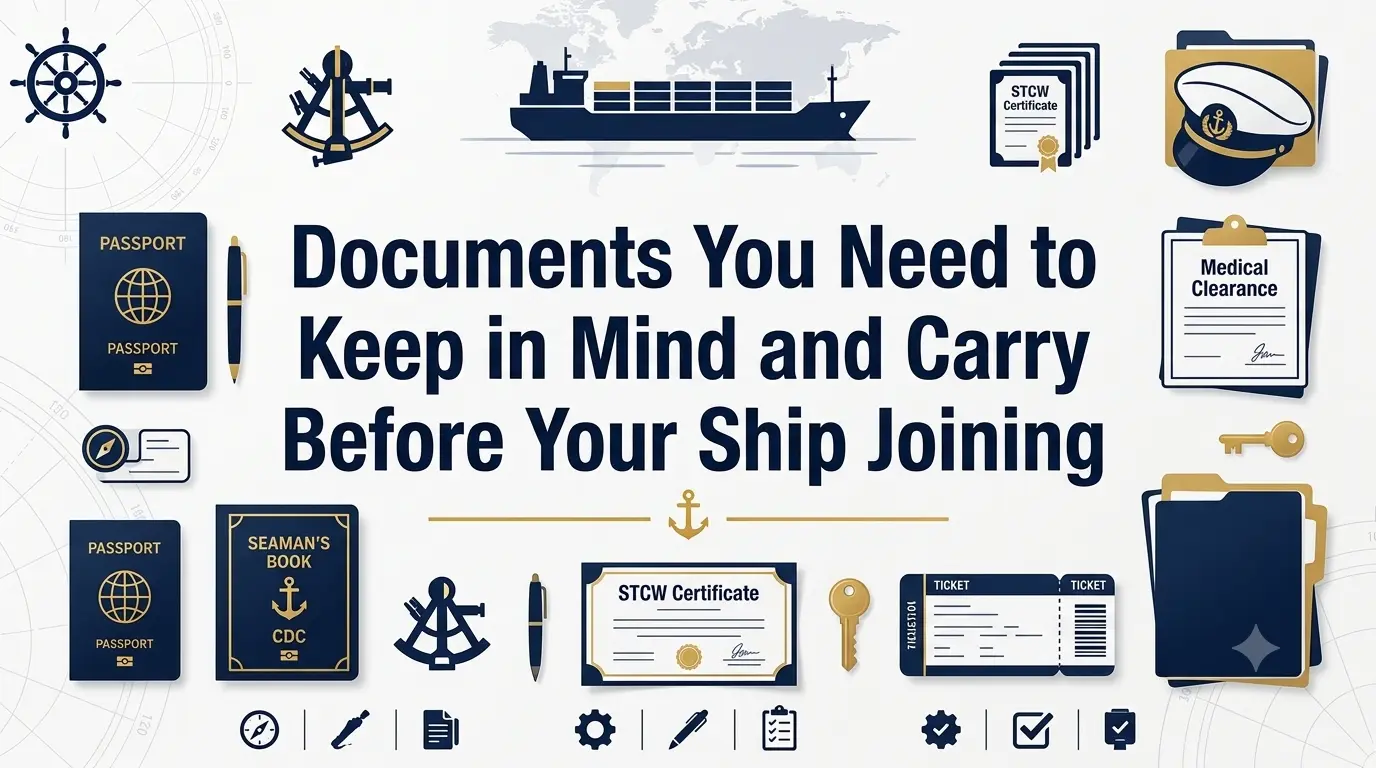
Joining your first merchant navy ship is an unforgettable moment. You have cleared your exams, completed your pre sea training, and secured your sponsorship. Now, you are ready to step on board and start your sea career.
Before you step onto the gangway, you need to prepare your paperwork and personal packing carefully. Missing a single original document or carrying an expired certificate can lead to massive delays. Shipping companies can cancel your joining, or port authorities might deny you permission to board the vessel.
To help you avoid last minute panic, here is a complete checklist of documents and essential items you need to verify and pack before your joining day.
Table of Contents
Primary Identity and Travel Documents
Your personal identity documents are your ticket to international travel and port clearance. You must ensure all these papers are valid and in top physical condition.
- Passport: Your passport is your primary identification across the globe. Make sure it has at least one year of validity remaining from your joining date. Check that it has enough blank pages for immigration stamps and entry visas.
- Continuous Discharge Certificate (CDC): The CDC is your official sea service record logbook. Check your CDC to ensure your personal details match your passport exactly. It must also have at least one year of validity remaining before you board.
- Indian National Database of Seafarers (INDoS) Number: Every Indian seafarer gets a unique eight character INDoS number. Keep a clean printed copy of your INDoS certificate with your main document file.
- Seafarers Identity Document (SID): The SID is a biometric identity card issued under International Labour Organization rules. It allows you to take shore leave and transit through foreign ports easily. Always carry your original SID card when traveling.
- Visas and Transit Documents: Depending on where your ship is trading, your company will assist you with getting specific entry visas:
- U.S. C1/D Visa: Needed if your ship enters American ports or waters.
- Schengen Visa: Mandatory for vessels operating within European waters.
- Transit Visas: Required for layovers or joining ports in specific countries.
- OK to Board Letter / Guarantee Letter: Provided directly by your employer or manning agency. This letter confirms that the shipping company assumes full financial responsibility for your travel and stay in the transit port.
Essential Maritime Safety and Training Certificates
International Maritime Organization rules state that every seafarer must complete specific safety courses before stepping on board. You must carry all your original STCW 2010 certificates and course completion papers.
- Basic Safety Training (STCW 2010) Certificates:
- Personal Survival Techniques (PST): Teaches life saving techniques and how to handle survival craft during emergency abandon ship situations.
- Personal Safety and Social Responsibility (PSSR): Focuses on basic workplace safety, team coordination, and environment awareness.
- Elementary First Aid (EFA): Covers basic emergency medical care and practical first aid response onboard.
- Fire Prevention and Firefighting (FPFF): Focuses on emergency fire prevention equipment and practical fire fighting methods at sea.
- Security Training for Seafarers with Designated Security Duties (STSDSD): Prepares you to handle security threats, anti piracy procedures, and access control duties on the ship.
- Specialized Vessel Training Certificates:
- IGF Code Training: Required if you are joining container ships or vessels that use low flashpoint alternative fuels such as LNG.
- Basic Training for Oil and Chemical Tanker Cargo Operations (OCTO): Mandatory for crew members joining oil or chemical tankers.
- Basic Training for Liquefied Gas Tanker Cargo Operations (GTFC): Mandatory for crew assigned to gas carriers.
Educational and Academy Certificates
You must prove that you possess the necessary academic qualification for your rank onboard. Keep your original academy and board certificates safe inside a waterproof folder.
- Maritime University Course Certificates: Original course completion certificates from your maritime institute. This applies whether you studied Diploma in Nautical Science (DNS), B.Sc Nautical Science, B.Tech Marine Engineering, Graduate Marine Engineering (GME), Electro Technical Officer (ETO), or GP Rating.
- Class 10th and 12th Mark Sheets: Original mark sheets and passing certificates from your school board.
- Passport Size Photographs: Carry at least 20 to 25 passport size photographs. Take these photos against a plain white background while wearing formal attire or your college uniform. You will need these for local port documents and ship landing passes.
Medical Fitness Certificates and Immunizations
Health regulations on ships are extremely strict. You cannot board any commercial vessel without proving you are medically fit and properly vaccinated.
- DG Shipping Approved Medical Certificate: You must undergo a full physical examination conducted by a doctor recognized by Directorate General of Shipping. The medical certificate must state that you are 100% fit for sea service. Ensure this certificate has at least one year of validity remaining.
- Yellow Fever Vaccination Certificate: Essential for seafarers visiting or transiting through ports in Africa and South America. The yellow fever vaccine certificate is valid for life, but it must be issued by an authorized government vaccination center.
- Additional Immunization Records: Keep updated certificates for Cholera, Hepatitis B, and other standard vaccines required by your shipping company.
Employment, Financial, and Miscellaneous Paperwork
Paperwork related to your contract and financial accounts must be settled before you board your flight.
- Signed Employment Agreement: Official contract signed by both you and your employer. It details your wages, rank, contract length, and working terms.
- Terms and Conditions of Service: Document laying down the rules, safety norms, and company policies you agree to follow while onboard.
- Next of Kin and Beneficiary Form: Document specifying your emergency contact details and family beneficiary information. Keep one copy with your company and leave a second copy at home with your family.
- International Bank Account Details: Open an international bank account with a recognized bank that supports foreign currency transfers. Ensure you have your active IBAN, SWIFT code, and bank account details printed out so your salary can be credited without errors.
- Maritime Union Registration Card: If you are registered with a seafarers union like Maritime Union of India, carry your registration card details.
Recommended Read: 14 Things to carry on a ship while joining: A complete ship checklist
Personal Packing Checklist: Essentials to Carry Onboard
Once your documents are double checked and neatly arranged, you need to turn your attention to your personal luggage. Remember that space in a ship cabin is limited, so pack smart and prioritize utility over luxury.
1. Work Clothing and Personal Attire
- Formal white shirts and dark trousers for official sign on and port visits.
- Boiler suits or coveralls if not provided directly at the joining port by your company.
- High quality safety shoes or steel toe boots.
- Comfortable cotton t-shirts, shorts, and track pants for time spent inside the ship accommodation.
- Sufficient pairs of quick dry cotton socks and undergarments.
- Light jacket or thermal innerwear depending on your ship’s sailing routes and climate.
2. Toiletries and Personal Hygiene
Pack enough personal hygiene items to last at least three to four months, as buying specific brand items onboard or during quick port calls can be difficult.
- Shampoo, bath soap, and shower gel.
- Toothbrushes, toothpaste, and dental floss.
- Shaving kit, extra blades, and foam.
- Sunscreen lotion, lip balm, and moisturizer to protect your skin against salt water and ocean winds.
- Nail clippers, comb, and personal towel sets.
3. Personal Medical Kit
While ships have a designated ship hospital with medical supplies, you should carry a basic personal kit for minor discomforts.
- Basic pain relievers, cold medicines, and antacids.
- Motion sickness tablets if you are prone to seasickness during your initial days.
- Bandages, antiseptic cream, and cotton pads.
- Any personal prescription medicines along with an official doctor prescription note.
4. Electronics and Power Accessories
- Unlocked smartphone with chargers.
- Universal travel adapter with multi plug support to fit various ship cabin sockets.
- High capacity power bank for travel days.
- Portable hard drive filled with movies, instructional books, and study material for leisure hours.
- Sturdy pair of noise isolation headphones.
Final Smart Tips Before You Board Your Flight
- Keep Original Documents in Hand Luggage: Never pack your passport, CDC, visas, medical certificates, or contract papers inside your checked in baggage. Always keep them in a waterproof file inside your carry-on handbag.
- Make Digital Backups: Scan every single document and save high quality PDF copies on your phone, external hard drive, and cloud storage accounts. Email a complete set of scanned files to yourself and your family members.
- Recheck Expiry Dates: Verify that none of your mandatory documents or certificates will expire during your contract period at sea.
- Arrive at the Airport Early: International crew travel involves extra document verification at check-in counters. Reach the airport well ahead of time to complete immigration smoothly.
Preparing for your first ship joining requires discipline, organization, and attention to detail. By double checking your document folder against this checklist and packing your personal items carefully, you can avoid unnecessary stress and focus entirely on starting your career at sea with confidence.
Frequently Asked Questions (FAQs)
1. How far in advance should I check the validity of my joining documents?
You should verify all your documents at least two to three months before your joining date. Ensure that your passport, CDC, and medical certificates have at least 6 to 12 months of validity remaining.
2. What should I do if any of my mandatory safety certificates expire while I am onboard?
You must inform your shipping company or crewing manager immediately before you join the vessel. Companies will never allow you to board a ship with certificates that will expire during your contract period.
3. Should I carry my original documents in my checked luggage or hand baggage?
Always carry all your original documents, certificates, and contract papers in your hand baggage. Checked luggage can get delayed or lost during transit, which can stop you from boarding your ship.
4. Can I join a ship if my medical certificate is issued by a local family doctor?
No, your medical examination must be conducted strictly by a doctor approved by the Directorate General of Shipping. Medical certificates from non approved doctors are completely invalid for ship joining.